Friday

Final Blog


After spending a semester in Intro to African American Studies I feel like I am walking away with a lot of lessons learned. We incorporated a lot of different learning styles which was something I had not yet experienced at OU, or at any University level, and also my first African American-related class. I still feel as strongly about the relevance of the class as I did at the beginning of the semester. I feel that every heritage, every race, every person is entitled to a story - and for that story to be heard. The African American story is extremely important because it influenced the way our Nation operates today. Without our history we could be a completely different country today. I have enjoyed learning about the people who influenced our history; I have always found history to be an important and interesting subject. If we don't know how we behaved before we cannot act in our future. I would recommend this class to my friends; I enjoyed the material and the class as well.

This is the first class where I've ever had a group project within one of my college courses, and it was very different than any other High School project. Just how college is a more demanding environment, so was the rigor of the project. I had grown accustomed to just taking tests, writing papers, and cramming for my courses on my own - this class was a jolt of reality with its variety of teaching styles. I personally am not a fan of working in groups. While it always seems like a good idea in the beginning, when you actually get into the project there are usually the leaders and those who are the followers, or slackers, and it can get to be a hassle. I was very proud of what my group had accomplished in the end, but the journey there was not a pleasant one. I enjoyed the idea of what the final project was, however I feel that many people have important classes for their majors and at times the project was demanding.

The personal blogs were an inventive way to express your thoughts on the subjects we discussed, especially when we had the opportunity to comment on our classmates blogs and build a conversation off of their original ideas and perspectives. I never had a class ask me to write in a blog and I thought that it was interesting way of teaching. It was more hands on to the students, and allowed flexibility in when and how long you could think about the assignments. I told one of my friends about the blog, and she thought that it was a really cool idea and I hadn’t really thought about it till then but afterwards I started to appreciate it more. I think that the free blogs were the most interesting blogs that I read. Many people took this opportunity to write about things I was interested in as well or things that I found interesting (the two that come to mind were the Lil Wayne & Inter-racial blogs, I enjoyed reading those). The blog posts about privileges and the television assignment were very interesting as well. It was cool to see the angle that other fellow classmates took on the assignment in comparison to me.

While this class has been a very interesting one, it was also a very demanding one. I did enjoy the class and the material it presented me with. The leaders of the Civil Rights Movement are some of the most fascinating people in our history I believe, and I enjoyed all the readings and discussions we did on them as well as the African American Experience as a whole.


Wednesday

African American Families in the media

1.  Sunday March 22st, 2009
     3:30 p.m.
     Barber Shop 2
    USA-34 (Tulsa channels)
    African Family - relationship between son and dead father as well as "adopted" Barbershop     family
    Positive

2. Tuesday March 17th 2009
     1:30 a.m.
     Daddy's Girls
     MTV-39 (Tulsa Channels)
     African American Sisters - the two affluent daughter of Reverend Run who moved to New York to start their own company
    Positive

3.  Wednesday March 25, 2009
      12:20 p.m.
      KFC commercial
      T.V. in the union
      African American family - one can only assume husband & wife
      Neutral 
    
4.   Tuesday March 17, 2009
       Media goes to jail
       Trailer to movie in another film
       African American family - humorous, Medea is the main character but we see clips of her family
       Negative (funny, but negative)

5.   Thursday March 26, 2009
      Obama Grants First Family Interview to 'Access Hollywood'  July 8, 2008 
     ABC News.com
     African American Family - the White House Family, President Obama, his wife, and daughters
    Positive

6.   Tuesday March 24, 2009
       Law & Order: Special Victims Unit
       4:00 p.m.
       USA-34 (Tulsa Channel)
       African American Family - mother & son, mother was a hooker who was shot while son was in the closet
       Negative

7.  Wednesday March 25, 2009
     Local 8 News
     NewsChannel 8 @ 5:00 p.m.
    African American Family - Female bank robber
    Negative


The television in my apartment has been out up until recently, so I had to dig into my brain to images that I had seen at home during spring break (where I spent most of my time plopped in front of our T.V. with the TiVO remote).  I am a very visual person, it is the best way that I learn and I am also a person who probably wastes too much watching T.V. Having these two things in mind I began to think about images I have grown up with and see everyday on the television that represent the African American Family.  At first I began to pick out families I could think of and choosing to write about them; the Cosby Show, the Fresh Prince, Weeds, etc.  When I asked if I could do that Prof. Flippin-Wynn said that would selecting a specific type of image, which is true and an angle I had not yet considered.  There are so many mixed images I can think of when I think of African American families.  Many of the movies that I've seen, that are specified to my age group, show low income families - yet others show families that are well off, or just average.  One of my all-time favorite shows Law & Order:SVU had a marathon of old episodes and one of the ones that I was able to catch was about an a young black prostitute who was killed while her little boy was in the closet and heard the whole thing.  This is a negative image in general, however the fact that this story line includes a race changes things - subconsciously.  An image that ties along to this is Medea goes to jail. This is strictly based on comedy, but it's comedic because people can relate to seeing this.  What kind of image is this? I am not saying that there aren't movies about white people going to jail and it being comedic, but when people see this it sets up for perhaps a stereotype.   
I feel as if the issue of race in television and other media is an issue that is hard to touch on.  There are so many different types of images thrown at us and I believe it is the mixture of these images with our personal experiences that help us to identify ourselves and others with these images. 
Tying things back to seeking out specific images of the African American Family I started to think back on some of the movies that I owned and if I could use those for examples.  I noticed a common theme between two of my favorite movies "Save The Last Dance" & "Step Up 2". Both of these movies are about white girls falling into the hip hop culture, but does this mean it has to be ghetto? That is the case here. And even further Save The Last Dance is about an inter-racial couple and touches on the issues with that.  This is kind of irrelevant, but these are the kind of movies that I watched in middle and high school, so they had an impression on my childhood. The images that we show to growing children have a stronger impact on someone rather than someone who has fully matured and will probably not change their conceived notions of race.
While i think that these images play a part in how we identify or view races I believe that our experiences in the real world are what have the greater impact. If someone is sheltered and had no interaction with people different from themselves, then yes they will probably be prown to take these images more into account. But I think that I base my thoughts about race more on personal experience, but maybe I am wrong! 
     

Thursday

Tulsa Race Riots of 1921

I am a native of Tulsa and the Race Riots are something that I learned about in school and I have even written an informative speech on the Riots for one of my previous communications classes. While watching the video I tried to recall upon the first time I learned about these riots, and I don't believe it was until the 8th grade when we took a "Tour of Tulsa" and even then I did not learn much. I believe if I had not attended my High School (Booker T. Washington) I would not have learned as much as I did about the tragic incidents that happened during those 72 hours. However this video presented a lot of information for me that I had never learned. The fact that Tulsa, Oklahoma, and even Congress denied compensation for the survivors is horrendous. While I understand the law is a very intricate and complicated thing, the fact that they claimed that the survivors had been "sitting on their rights" for the past eighty years is complete bull and even insulting. The defense counsel on this case made me mad to listen to; the lies and things he said were infuriating to listen to. One of the shocking things that I learned was how they made the black men clean the debris out of Greenwood, for no pay after their lives and homes had been attacked! They had to clean up what others had done them, under their supervision, for ZERO PAY. That was truly shocking.


I thought the video was very informative; it gave a thorough description of what happened as well as many visual aids to allow the viewer to try and completely grasp what happened. But at the same time the video's main focus was on how the survivors were not receiving compensation. They had only received a brass medal of honor, something that I can't understand why this is the only recognition they had gotten. But that was the main purpose of the video, to tap into the viewers ethos and recieve donations. Not that I am saying that is bad, because I fully support that mission -- they deserve recognition as well as compensation. It was just that when I was coming to view the film I thought it was more like an interview with the survivors, focusing on what happened during those 72 hours as well as the years that followed.
One of the most important points that they made was that American does not really recognize this incident. I am sure that the only reason I ever learned about it was because I attended a public school in Tulsa, and I did not really learn about it until High School. (This is one of the many reasons why I did an informative speech on it last semester, because I went to school in Kansas and in my class survey only one other student had learned about the incident - and she, too, was from Tulsa) No one likes to air their dirty laundry, but this incident cannot be overlooked, it needs to be addressed. Especially in Oklahoma! It happened here - we can't forget it. Another small example of this was that i was texting a friend who had lived in OKC their whole life and I told them I was at a movie about the Riots and they knew nothing about it, and I am sure there are tons of others stories out their similar to this. So the questions is - how do we change this? I think the answer lies in us. We have to make the change. By demanding our government officials to acwknowledge what happened, teach on it in schools, as well as give the survivors the respect they deserve. I am appalled that they have not done so yet.

Wednesday


The Civil Rights Movement, which took place during the years of 1955-1968, was essentially integrationist, "it gave Black people in the U.S. their first major accomplishments of the decade." (185.) It was the building of a mass movement of people across the United States stimulating and politically educating millions of African American people. The main goal was to break down barriers that held them from full political participation as well as doing away with negative feelings towards the black race, erasing the difference in color. The ultimate goal was to abolish racial discrimination and to be viewed and treated as equals. 


Many believe that it was the murder of 14 year old boy Emmett Till that motivated the civil rights movement. Till was brutally murdered after saying "bye baby" or whistling (the facts have been disputed) to a white woman, while visiting Mississippi from his hometown Chicago. Till felt comfortable speaking with white woman because of his hometown; things were a lot different there rather than in the South of the Mississippi. The husband of the woman who Till had "done the talking to" and his half brother came and got Till from his home several nights later where the beat him, shot him, and threw him into the river with a cotton gin fan around his neck. Emmett's mother allowed for an open casket of her son's body. Although the images are horrifying and make you question how anyone could ever possibly do such a thing, it is apart of our history. It happened. And Emmett's mother did not want that to be overlooked. The trial was very unfair and they found the two men innocent after only debating for a little over an hour. Many believed that this is one of the major events that lead to the Civil Rights Movement because of the unfair justice that Till received. He did not receive a trial by his peers (the jury was all white), and therefore prejudices were obvious in the South towards black people. 

Whenever the slides were pulled up today in class i immediately remembered Emmett and his story. Although I can't remember where I first learned it, I can only assume high school, his story never left me. I immediately became overwhelmed with emotion because hearing about events like that make me sick and ashamed of where we have come from to be where we are today. 

The SNCC, also known as the Student Nonviolent Coordinating Committee, was one of the essential organization in the Civil Rights Movement. It emerged in April of 1960 from student meetings that were held by Ella Baker. SNCC grew to become a large organization with many supporters in the North who contributed to their work in the South. The organization was responsible for many sit-in's and freedom rides, however their most contributing factor was in its field work - organizing voter registration drives all over the South.  In the later 1960's, however, their strategies changed; the began to focus more on "black power" as well as protesting against the Vietnam War. Why should African American men fight for a country where they do not receive equal rights and liberties? Stokely Carmichael, who was one of the leaders of SNCC, argued that blacks should be free to use violence in self-defense, then later he advocated revolutionary violence to overthrow oppression. "Carmichael rejected the civil rights legislation that the movement had fought so hard to achieve as mere palliatives." (http://www.aavw.org/protest/carmichael_sncc_abstract06_full.html)  The Department of Defense states in 1967: 
SNCC can no longer be considered a civil rights group. It has become a racist organization with black supremacy ideals and an expressed hatred for whites. It employs violent and militant measures which may be defined as extreme when compared with those of more moderate groups.
This obvious change to radical views made for a different sort of organization, ones who's goals might not have been seen as something very positive anymore.

Malcolm X and Martin Luther King Jr. were two very influential men during the Civil Rights Movement. While they shared many common views and tactics, they also had some very key differences. Malcolm stressed the right and responsibility of self-defense, while King was more about the non-violent acts. However, like the quote said on D2L King was not against Blacks rebellion, however he did not see that it was necessary to have to be violent to get to where you wanted to be. 

The Civil Rights Movement was indeed a success as we can see today. All races share equal rights, and there is no segregation. There have been many laws laid out to insure these rights and securities. The Movement was a very strong and important movement in our history. It took many years, many instances, many stories and cases to get to where we stand today. Without these efforts made by others, America would certainly be a completely different world today. 

I definitely agree with the statement that without other opinions and points of view, our views and thoughts are one-sided.  In a sense, I feel that this coordination of thoughts and ideas is what makes Diversity so important. When we are open and influenced by different people, different lifestyles we are become more open-minded (or in some cases, not) and we learn how others interpret things different than ourselves. However, I am not sure how much you can change a person to be open to others thoughts and ideas if it is not in their personality to be that way. I like to believe that I am very open to all thoughts, theologies, etc. but perhaps that is not just due to what I was exposed to throughout my life but also just because that is who am I. At the same time, maybe who I am is influenced by what I have seen. It is very tricky that way.

Thursday

What is privilege? I find that that is a very good question. As defined by dictionary.com privilege is: 1. a right, immunity, or benefit enjoyed only by a person beyond the advantages of most. Privileges come in all shapes and sizes. Things that are so common to us yet are privilege, and we do not even realize it. I find that privilege is in the eyes of the beholder (kind of like beauty). Life in America is a privilege, for example. We have endless opportunities, jobs, connections, wealth, technology, food resources, that so many other countries do not have the luxury of having as well. There are so many things in my life that I take for granted, and it takes looking at someone else who is worse off to realize the privileges that you actually do have. While reflecting today upon those gifts I was granted here is the list that I compiled:

1. I have the privilege of waking up in a safe environment. I do not have to fear for my safety, the safety of my city, or of my Nation. I can wake up knowing that I will not be threatened by bombs, guns, or anything of that nature.
2. I have the privilege to go to college. My parents can afford to pay my way through college and I do not have to take out student loans.
3. I have the privilege of being able to communicate with others around me. Wether that be in the speech we communicate amongst ourselves, the words I write, the sentences I form, the words I read. I can communicate my thoughts and ideas in an intelligent manner.
4. I have the privilege of food. And not just food, but food choices. I can choose to eat something from my fridge or I can purchase food outside of my home.
5. I have the privilege of making my own money and using it to cover my expenses. 
6. Today I took a test in my french class, it showed me I have the privilege of knowing another language and having the opportunity to go to a school where I was taught it at a young age.
7. Today I worked out at the gym, I have the privilege of having a healthy body where I can use all my ligaments properly and efficiently.
8. I have the privilege of owning my own computer. I lost my hard-drive yesterday to my laptop and realized what a privilege it is to have my own personal computer. I don't have the schedule my day around visiting the library, I can get on it whenever I need to. 
9. I have the privilege of being able to travel. Of knowing people whom I can visit, having the means to make the trip, and the parents who allow it.
10. I have the privilege to buy new clothes. Not only for need-be reasons, but mainly for fashion.
11. I have the privilege of owning my own car. I can come and go as I please, and stay as I see fit. I have an open road in front of me
12. I have the privilege of air conditioning when I am hot (earlier today) and heat when I am cold (this evening) mostly where-ever I go. 
13.  I have the privilege of being relatively good-looking. I do believe pretty people have it easier (not saying that's me at all, but others... I think that it's true)
14.  My family is probably one of my most essential privileges that I look over. My parents are very involved in what I do. They have always given my guidance, something I am sure I have yet to truly show my appreciation for. 
15.  I have the privilege of owning a cell phone. So does everyone in America these days, but we forget how helpful and essential to our everyday lives now until we loose it, break it, or let the battery die.
16. I am privileged to have amazing friends. Not only friend whom I am can trust, but ones who inspire me. Some people can take away from your life experience, everyone I keep near enriches mine.
17. I am privileged to own a navigation system in my car. I am terrible with directions, and on days like today when I get lost coming home from the airport and drive 20 minutes headed to the middle of nowhere, I realize what a life save (and time) it is.
18. I am privileged to have a bed to sleep in every night. Not only a bed, and a comfortable one at that, but a roof over my head and a place to securely store all my personal belongings.
19. I have the privilege of owning a personal computer. Yesterday my hard-drive crashed and I lost everything. Being without a computer for more than 24 hours was a world I was not used to. I am privileged to not have to work a schedule around being able to get to a comp.
20. I have the privilege of being able to speak my mind. It is my right and my privilege.  

After reading McIntosh's article about privilege I took a whole new thinking to the word. The white privilege that is discussed is truly something that I have never realized before. It is like the male superiority, we don't want to see it or it has just become accepted. But by making these realizations and being them to other peoples attention is what will stop it from continuing. 
The NAACP was instrumental to the African American experience because it helped to fight discrimination and oppression. The Niagara Movement, which later gave ay to the National Association for the Advancement of Colored People (aka the NAACP), demanded the right to justice, education, vote, abolition of Jim Crow laws, equal treatment in the armed forces, as well as enforcement of the 13th, 14th, & 15th amendment. Because it adopted many of the Movement's members, it adopted it's ideas as well but not as violent because of the presence of white's on the executive board. (Karenga. 169)


The NAACP Youth Council of Oklahoma City, Oklahoma, as well as Clara Luper, were the first to take a major step towards the desegregation of lunch counters in 1958. Because of their peaceful sit-in the Katz franchise, at which they ate, desegregated their lunch counters in 3 states.  After witnessing the success that took place within Oklahoma, others followed suit in demonstrations and saw results across the Nation. From 1958-1964 Luper was a major leader in the fight to end segregation within Oklahoma. Also, the NAACP lead lawsuits focusing on the right to vote and racial segregation. It played an important role in the challenge of Guinn v. Harris (1915) to Oklahoma's discriminatory grandfather clause that disfranchised most African American citizens, as well as exempting many whites, from certain voter registration requirements.  This persuaded the Supreme Court to rule in Buchanan V. Warley (1917) that local and state governments are not allowed to officially segregation African Americans into separate residential districts. 

luper_clara.jpg


The legal movement began in 1919 when white woman were granted the right to vote in the election, however black men were not. By placing white woman about black men in the political hierarchy African American men sought out the right to vote for themselves, and represent their wives. By beginning to demand voter rights they were contributing to the Civil Rights movement in order to gain equality & justice like the white men experienced, the basis for the movement. 

The legal movement is similar to the NAACP's relevance to the African American experience because it was seeking equality for the African Americans in their rights to vote. Being able to vote is one our basic rights, as written out in the constitution. While African American's were not guaranteed this right, they sought out to make it so. The NAACP helped in the case Love v. Griffin to establish these rights for African American's in Texas. While the legal movement was more specific, it fits right in with the NAACP's overall goals. 

The Reconstruction period (1865-1877) was a mixture of hope and despair for African Americans. After a strong start it faltered in betraying it's own ideals and beliefs that the post-war era proposed such as: rebuilding the South's economy, integration of freed Africans, etc. Because most white's never actually accepted the freedom and equality of African Americans and passed Black Codes which made control over African Americans just as great as slave holders. Although their were many progressive strides made, ultimately the efforts to reconstruct life of the African American & the South based on equality, justice, and freedom failed for many reasons.  The groundwork it laid for future generations was relevant. Although it may have seemed like they took 2 steps forward and 1 step back, it was still progress by any measure. (Karenga 163-165)

The NAACP still plays a very active role looking after the civil rights of all the members of it's communities. Civil Rights such as equal education, something one might not even think to remember in this day in age, as we learned from our guest speaker. They have chapters specified to the needs of Youth. As can be found on the NAACP website their mission is "to ensure the political, educational, social, and economic equality of rights of all persons and to eliminate racial hatred and racial discrimination." (www.naacp.org)

After having our recent visitors I learned a lot about the African and African American experience.  While throughout my education I have learned the basics of American history and the general knowledge, when you encounter people who take an active part (or have taken) and hear stories about people you have not heard of - it makes it more realistic.  The fact that Clara Luper began the sit-ins in our state is pretty awesome. So it what Ada Fisher did for African Americans to be accepted into law school, and given equal opportunities as well as education.  These experiences are what shape our history.  Sometimes these small stories that add up to present the greater picture can get lost, and that is what this class is about I think.  About not just accepting the greater picture, however learning about the smaller pieces that make it what it is. 

fisher1.jpg

Friday

RACISM

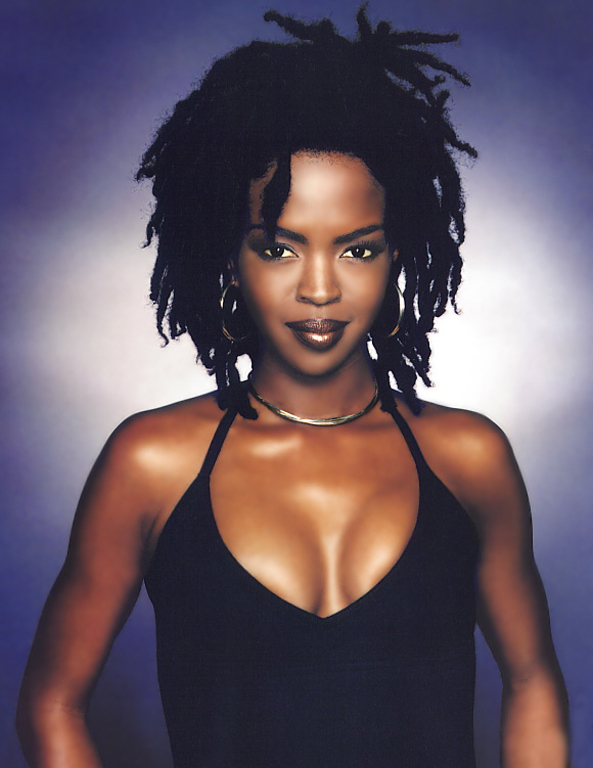
I find that when I am given the opportunity to talk about whatever I want, I can never figure out what that whatever is. So I settled on writing about one of my favorite singers, Lauryn Hill


Hill's work in the group "The Fugees" or "Refugee Camp" are some of my all time favorite songs ( Ready or Not & Killing me Softly to name a few). A few months ago however, while listening to Lauryn Hill with friends we were all talking about how much we love her voice and then someone informed me that she was quoted saying "she's rather she her children starve than have white people listen to her music".  This really offended and upset me, how could she say that? Up until today, when I actually looked up the facts on that story did I find out that it was really a rumor from when someone called into the Howard Stern show reporting they had heard Hill say that to MTV.  She was quoted saying to Teen People in March of 1999 about the rumor:

“From this one broadcast, all of a sudden people who appreciated my music thought that there was something wrong with who I was and what I represented,” says Lauryn. Instead of letting a publicist act on her behalf, Lauryn, furious and very hurt, called a radio station herself to deny the charge. “I said, ‘How can I possibly be a racist? My music is universal music. And I believe in God. If I believe in God, then I have to love all of God’s creations. There can be no segregation.‘”

“Let me clarify this right now,” Lauryn responds forcefully. “I am not a racist. I love people who love God. I love good people. If you’re a good person with a good heart, you’re cool with me. And I hope I’m cool with you. There’s nothing racist about anything in my heart.“

I think that racism is terrible coming from any race. It is something that gets my blood boiling and makes me upset. While I truly believe that we have made obvious progressions, there is still evidence of racism everywhere. White people are not the only people that are racist, a lot of people have these tendencies without realizing them; due to different reasons: the way they grew up, the environment, the people they grew up with or come into everyday contact with.  Another one of my favorite movies "Crash" deals with all sorts of different types of racism.  I believe the stories that they share are sometimes views we wouldn't necessarily think of.  I hope that our Nation keeps moving towards eliminating racism, but it is something that has to be a conscious effort -- BY EVERYONE.