The NAACP was instrumental to the African American experience because it helped to fight discrimination and oppression. The Niagara Movement, which later gave ay to the National Association for the Advancement of Colored People (aka the NAACP), demanded the right to justice, education, vote, abolition of Jim Crow laws, equal treatment in the armed forces, as well as enforcement of the 13th, 14th, & 15th amendment. Because it adopted many of the Movement's members, it adopted it's ideas as well but not as violent because of the presence of white's on the executive board. (Karenga. 169)
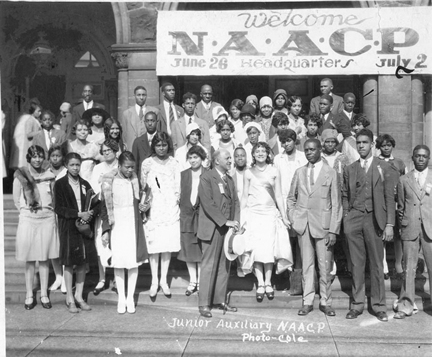
The NAACP Youth Council of Oklahoma City, Oklahoma, as well as Clara Luper, were the first to take a major step towards the desegregation of lunch counters in 1958. Because of their peaceful sit-in the Katz franchise, at which they ate, desegregated their lunch counters in 3 states. After witnessing the success that took place within Oklahoma, others followed suit in demonstrations and saw results across the Nation. From 1958-1964 Luper was a major leader in the fight to end segregation within Oklahoma. Also, the NAACP lead lawsuits focusing on the right to vote and racial segregation. It played an important role in the challenge of Guinn v. Harris (1915) to Oklahoma's discriminatory grandfather clause that disfranchised most African American citizens, as well as exempting many whites, from certain voter registration requirements. This persuaded the Supreme Court to rule in Buchanan V. Warley (1917) that local and state governments are not allowed to officially segregation African Americans into separate residential districts.

The legal movement began in 1919 when white woman were granted the right to vote in the election, however black men were not. By placing white woman about black men in the political hierarchy African American men sought out the right to vote for themselves, and represent their wives. By beginning to demand voter rights they were contributing to the Civil Rights movement in order to gain equality & justice like the white men experienced, the basis for the movement.
The legal movement is similar to the NAACP's relevance to the African American experience because it was seeking equality for the African Americans in their rights to vote. Being able to vote is one our basic rights, as written out in the constitution. While African American's were not guaranteed this right, they sought out to make it so. The NAACP helped in the case Love v. Griffin to establish these rights for African American's in Texas. While the legal movement was more specific, it fits right in with the NAACP's overall goals.
The Reconstruction period (1865-1877) was a mixture of hope and despair for African Americans. After a strong start it faltered in betraying it's own ideals and beliefs that the post-war era proposed such as: rebuilding the South's economy, integration of freed Africans, etc. Because most white's never actually accepted the freedom and equality of African Americans and passed Black Codes which made control over African Americans just as great as slave holders. Although their were many progressive strides made, ultimately the efforts to reconstruct life of the African American & the South based on equality, justice, and freedom failed for many reasons. The groundwork it laid for future generations was relevant. Although it may have seemed like they took 2 steps forward and 1 step back, it was still progress by any measure. (Karenga 163-165)
The NAACP still plays a very active role looking after the civil rights of all the members of it's communities. Civil Rights such as equal education, something one might not even think to remember in this day in age, as we learned from our guest speaker. They have chapters specified to the needs of Youth. As can be found on the NAACP website their mission is "to ensure the political, educational, social, and economic equality of rights of all persons and to eliminate racial hatred and racial discrimination." (www.naacp.org)
After having our recent visitors I learned a lot about the African and African American experience. While throughout my education I have learned the basics of American history and the general knowledge, when you encounter people who take an active part (or have taken) and hear stories about people you have not heard of - it makes it more realistic. The fact that Clara Luper began the sit-ins in our state is pretty awesome. So it what Ada Fisher did for African Americans to be accepted into law school, and given equal opportunities as well as education. These experiences are what shape our history. Sometimes these small stories that add up to present the greater picture can get lost, and that is what this class is about I think. About not just accepting the greater picture, however learning about the smaller pieces that make it what it is.


Colette, I really liked reading your blog because you seem interested in what you're talking about and very knowledgeable. I didn't know about that desegregation of lunch counters in Oklahoma, and I think that it is very interesting and cool that Oklahoma had a large part in helping to push the civil rights movement. 54. I also really liked what you had to say about the recent speakers that came to talk to our class. I agree that having people come to tell their stories makes it much more personal and helps to make you realize that this stuff actually happened and isn't just something simple that we learn about in school. Great job!
ReplyDelete